
Companies Want Ownership Without Giving Ownership
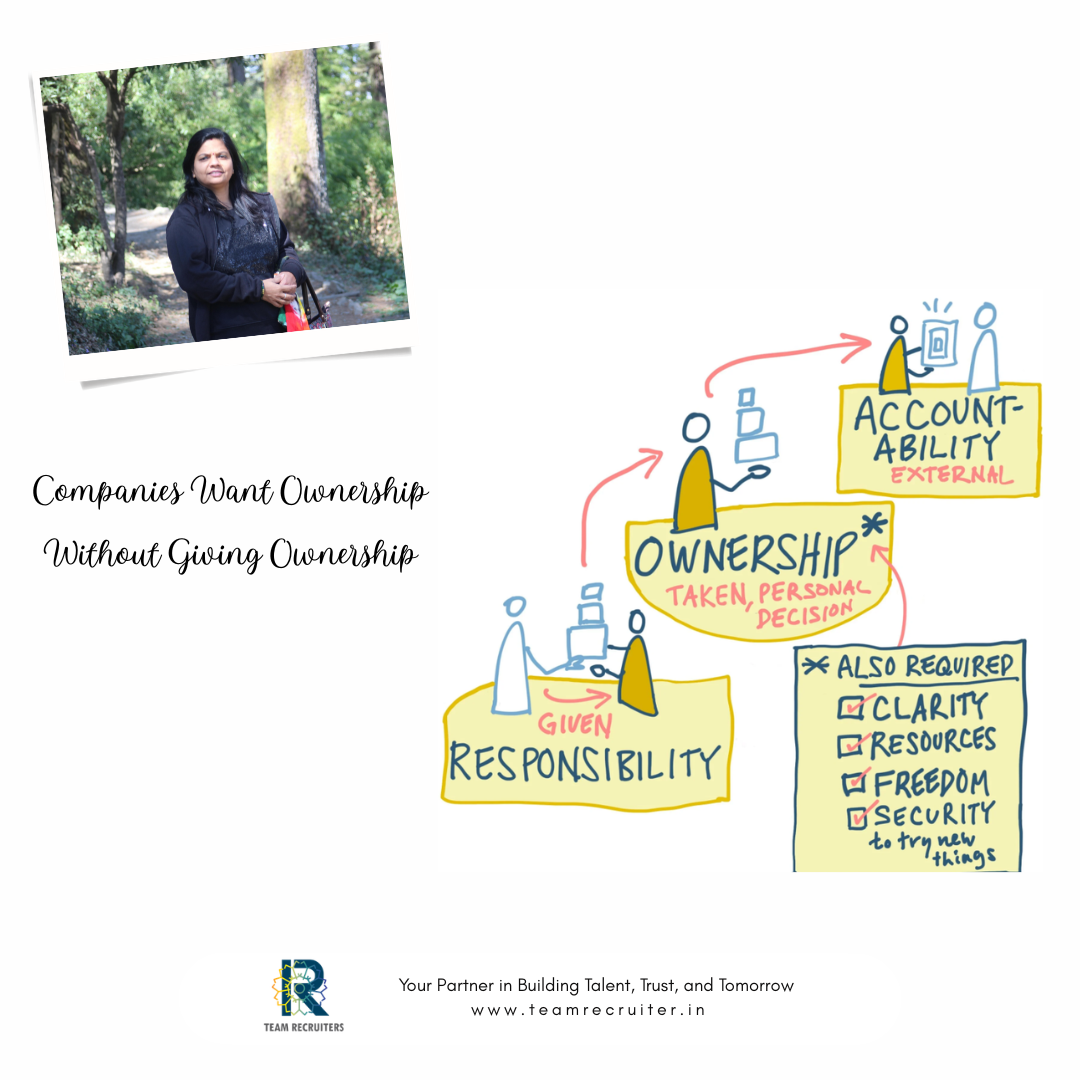
“We want people who take ownership.”
You hear this everywhere.
But sometimes, what companies actually want is ownership of outcomes without giving ownership of decisions.
I have seen professionals being told:
“Take complete ownership of the business.”
But when they try to make a decision:
“Please check with your manager.”
When they propose a change:
“We have always done it this way.”
When they question an inefficient process:
“That decision is not yours to make.”
And when the numbers don’t improve:
“Why didn’t you take ownership?”
Ownership cannot survive without authority.
If you want someone to own a target, give them reasonable control over the resources, processes and decisions required to achieve it.
If you want a business head to be accountable for revenue, let them have a say in pricing, people and market strategy.
If you want an HR leader to own attrition, give them the ability to influence hiring, managers, compensation structures and employee practices.
If you want a functional leader to build a high-performing team, don’t interfere with every hiring decision and then hold them responsible for the team’s performance.
There is, of course, a difference between empowerment and unlimited freedom.
Governance, budgets, checks and organisational boundaries are necessary.
But within those boundaries, professionals need trust, authority and space to act.
Otherwise, “ownership” becomes just another word for accountability without control.
And over time, good professionals stop taking initiative.
They learn that taking ownership means taking the blame—while someone else retains the power to make the decisions.
The best organisations understand a simple principle:
If you want people to own the outcome, give them enough ownership of the journey.
Because accountability without authority doesn’t create leaders.
It creates frustrated employees.

Comments are closed.