
The Emotional Side of Job Searching: The Part We Rarely Talk About
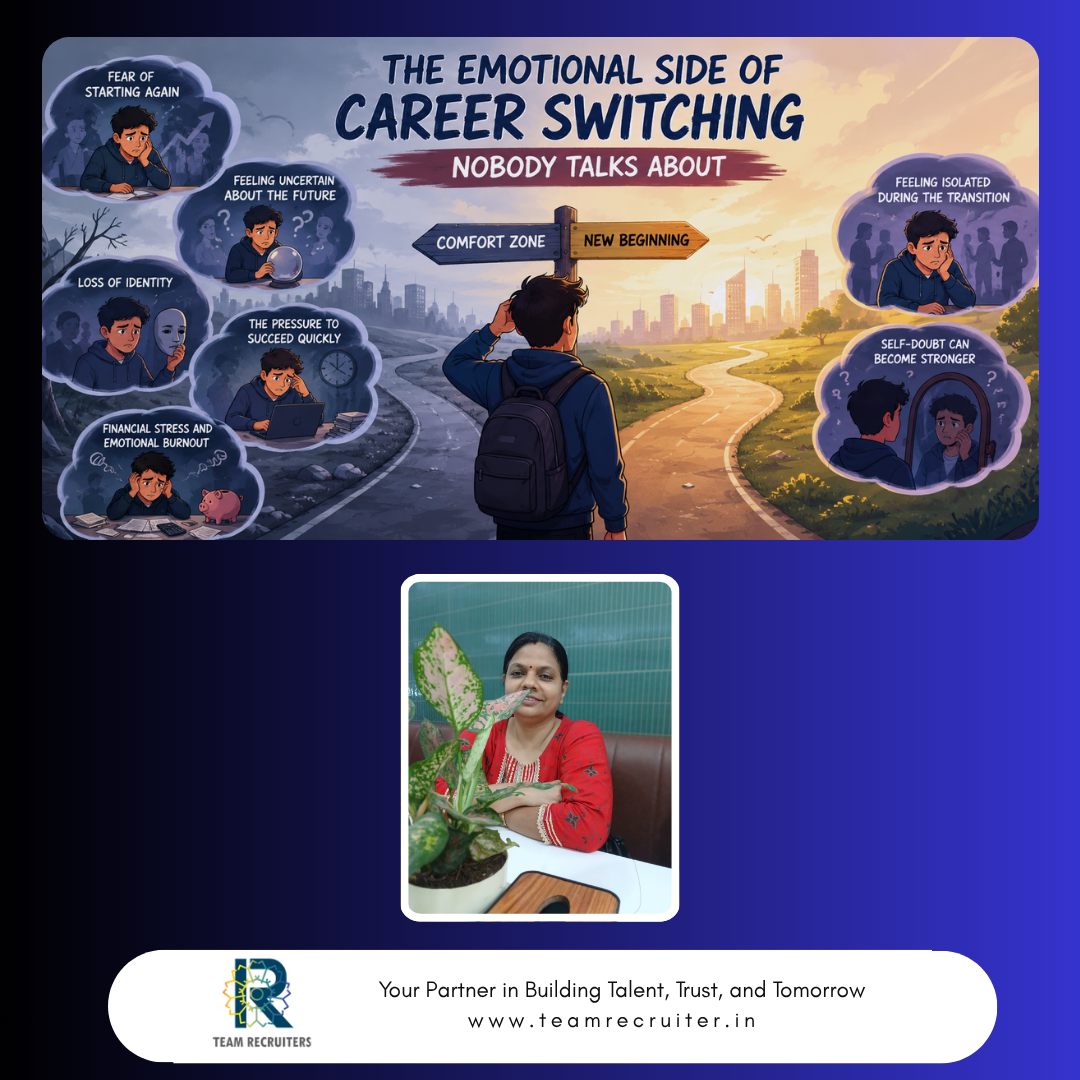
When we discuss job searches, we usually focus on resumes, interviews, salary negotiations, and offer letters.
But there is another side that often goes unnoticed—the emotional journey.
Over the last two decades in recruitment, I’ve interacted with thousands of professionals across experience levels. One thing has remained constant: behind every CV is a human being carrying hope, anxiety, self-doubt, and responsibility.
I still remember a senior professional who had spent nearly 15 years with one organization. After a restructuring, he suddenly found himself looking for a job. On paper, his profile was excellent. Yet every rejection made him question his own worth.
In one conversation, he said, “I never imagined I would have to prove myself again after all these years.”
It wasn’t a skill gap. It was an emotional battle.
On the other hand, we recently worked with a young candidate who had reached the final rounds in four different companies but didn’t receive an offer from any of them. By the time we connected for the fifth opportunity, confidence had given way to hesitation. Every interview felt like another test he was destined to fail.
We spent more time rebuilding his confidence than discussing interview questions. He eventually secured the role—not because his capabilities had changed overnight, but because his mindset did.
Job searching can be emotionally exhausting.
- Waiting endlessly after interviews.
- Receiving generic rejection emails.
- Watching others announce new jobs on LinkedIn.
- Managing financial responsibilities while trying to stay positive.
- Smiling during interviews despite carrying personal stress.
For recruiters and hiring managers, this is a reminder that every candidate deserves respect, timely communication, and empathy. A simple update, constructive feedback, or honest conversation can make a significant difference.
For job seekers, remember this:
A rejection is feedback on a particular fit, not a verdict on your capability.
The right opportunity often comes after several disappointing ones. Stay prepared, keep learning, seek feedback, and don’t allow temporary setbacks to define your professional identity.
Careers are marathons, not sprints. Every interview adds experience, every rejection builds resilience, and every setback prepares you for the opportunity that truly aligns with your strengths.
Sometimes, what people need most during a job search isn’t another vacancy—it’s reassurance that they are still valuable.

Comments are closed.