
Workplace Favoritism & Invisible Politics – The Silent Career Killers?
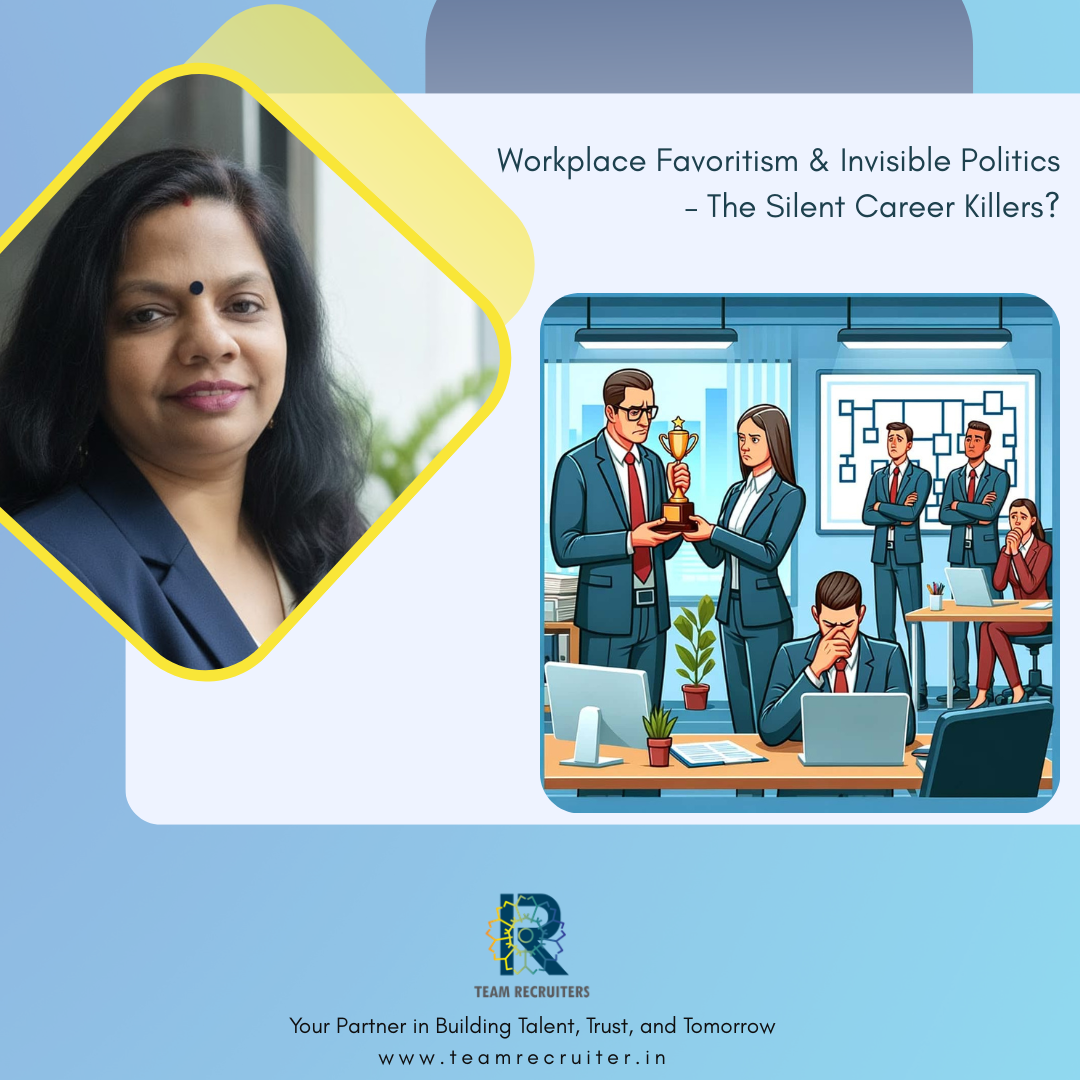
Every organization talks about performance, merit, and fairness. Yet, in many workplaces, careers are often influenced by something that never appears in the appraisal form—favoritism and invisible politics.
I’m not referring to healthy networking or building professional relationships. Those are essential. I’m referring to situations where proximity to power outweighs performance.
A real-life example.
A highly competent employee consistently delivered beyond expectations, met every deadline, mentored juniors, and earned appreciation from clients. Yet, when promotion time arrived, the opportunity went to another colleague who had a stronger personal equation with the decision-maker but a comparatively modest track record.
The result?
The high performer didn’t create a scene. They simply disengaged, stopped contributing beyond the bare minimum, and eventually joined a competitor. The organization didn’t just lose an employee—it lost experience, credibility, and a role model.
Here’s another common scenario.
A manager repeatedly assigns high-visibility projects to the same “trusted” few, while equally capable team members are overlooked. Over time, those excluded employees stop volunteering for challenging assignments because they believe the outcome is already decided.
This isn’t just favoritism. It’s a gradual erosion of trust.
The irony is that workplace politics rarely appears in exit interviews. Employees often cite “better opportunities” or “career growth,” while the real reason is feeling invisible despite consistently performing.
Leaders must ask themselves a difficult question:
Are we rewarding contribution, or merely rewarding comfort and familiarity?
Employees don’t expect every decision to go in their favor. They do expect the process to be transparent, objective, and fair.
Organizations that genuinely reward merit create cultures where people compete through performance rather than influence. Those that don’t eventually lose their best talent—not because of salary, but because of perceived injustice.
At the end of the day, favoritism may retain a few loyal followers, but fairness builds an organization that people are proud to belong to.
Have you witnessed workplace favoritism impacting morale or retention? How should leaders address invisible politics before it becomes a culture problem?

Comments are closed.