
The Candidate Who Looked Perfect on Paper — But Wasn’t
Other Articles:
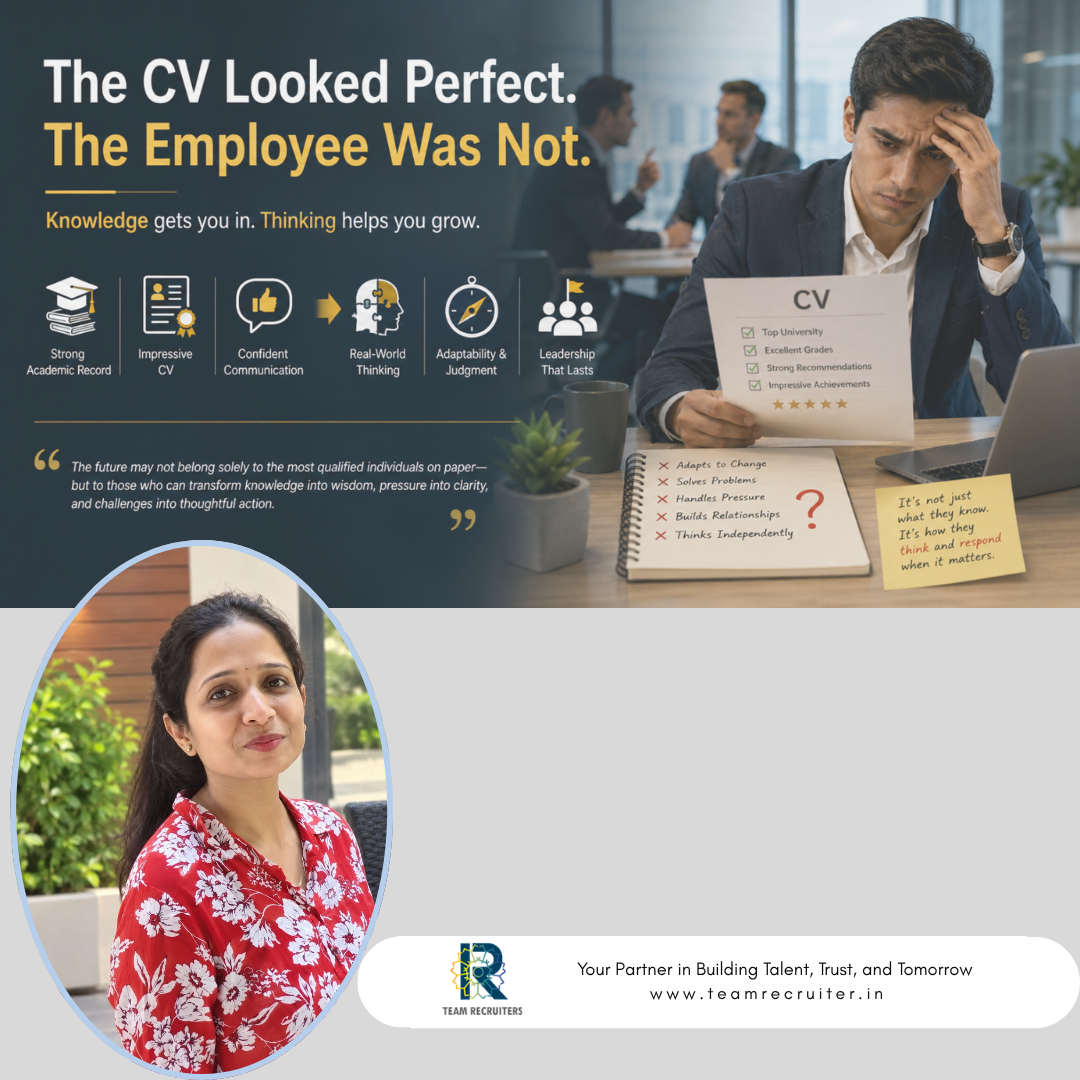
Sometimes, the most difficult hiring lessons come from candidates who look perfect on paper.
We experienced something similar recently while working on a Sales Coordinator position for a startup.
The candidate appeared to be a 100% fit.
The experience matched.
The skills matched.
The profile matched the requirement.
The candidate interviewed well.
And, on paper, there seemed to be very little reason to hesitate.
The hiring happened.
But once the person joined, the reality started looking different.
The startup was still in its formation stage. The business was evolving, processes were being created, responsibilities were not always clearly defined and, initially, the workload was relatively low.
This required someone who could operate with a degree of ambiguity—someone who could take initiative, stay engaged even when there wasn’t a structured task list, and seek clarity rather than wait for instructions.
That is where the mismatch started becoming visible.
The senior management found themselves having to provide considerably more handholding than expected. Small operational issues began taking disproportionate management time. Expectations on both sides started diverging, and what initially looked like a straightforward hire gradually became a complicated working relationship.
The important lesson?
A candidate can be 100% fit for a Job Description and still not be the right fit for the organisation at that particular stage.
Hiring is not only about:
Skills + Experience + Qualification.
It is also about:
Mindset + Adaptability + Ownership + Environment + Stage of the Organisation.
A structured organisation and an early-stage startup may need very different behaviours from people performing seemingly similar roles.
For recruiters, this means our job cannot end with matching the CV to the JD.
For hiring managers, it means the conversation must go beyond “Can this person do the job?”
We should also ask:
“Will this person thrive in the way our organisation currently works?”
The perfect candidate on paper may still struggle in the real world.
Because hiring is ultimately not about finding the best profile.
It is about finding the right fit for the reality of the role.

Comments are closed.