
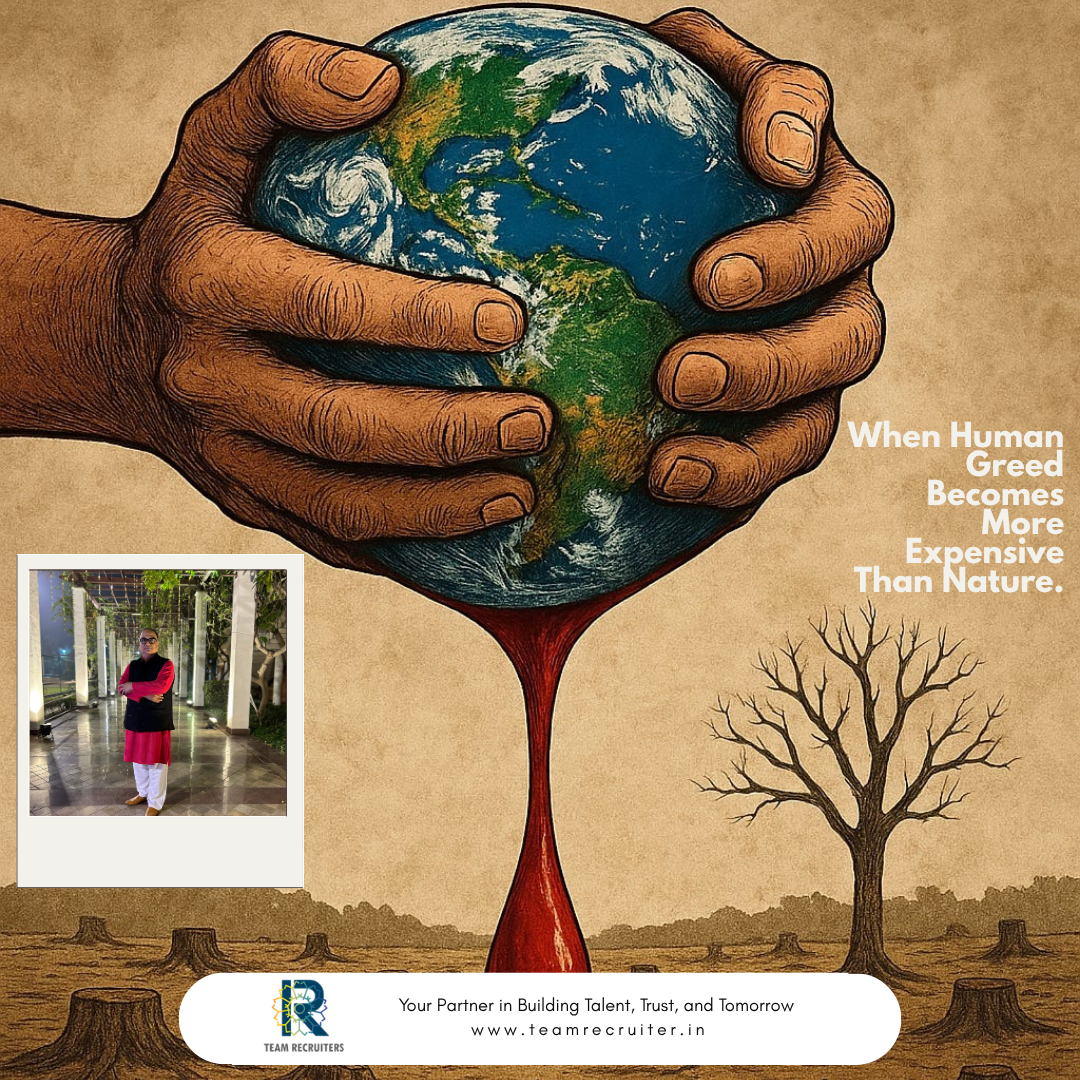
When Human Greed Becomes More Expensive Than Nature
Other Articles:
The Other Side of Entrepreneurship
Recruitment Today is More Marketing than Assessment!
The WFH vs WFO Dilemma: A Generational Shift or a Workplace Reality?
The Impact of Artificial Intelligence on Recruitment
An Organisation’s perspective on Hiring!
How much is enough?
We chase profit, growth and convenience so relentlessly that somewhere along the way, we seem to have forgotten the cost of our actions.
Look around us.
The devastating floods in Nepal, landslides across India, collapsing infrastructure and communities losing homes, livelihoods and lives are reminders of how vulnerable we have become. Natural forces and climate change are certainly factors, but unchecked construction, deforestation, environmental exploitation, poor planning and disregard for safety can turn disasters into catastrophes.
And greed doesn’t stop there.
We manufacture medicines where quality and safety should be sacred, yet compromises and corruption can put thousands of lives at risk.
Every Indian festival brings warnings about adulterated mawa and sweets. Fruits and vegetables are grown or treated with excessive chemicals because faster growth, better appearance and higher margins often take precedence over long-term health.
We adulterate food.
We compromise medicines.
We exploit natural resources.
We cut corners in construction.
We manipulate systems.
We ignore safety until tragedy strikes.
And then comes the most convenient part—we blame someone else.
We blame politicians.
We blame the government.
We blame the system.
We blame regulators.
We blame businesses.
We blame corruption.
Almost everyone—except ourselves.
But isn’t the system also a reflection of the society that creates, participates in and sustains it?
Greed isn’t restricted to the billionaire chasing another billion. It can exist in the trader adding an adulterant, the manufacturer compromising quality, the official accepting a bribe, the builder ignoring safety norms—or even the consumer who knowingly chooses convenience or a cheaper option despite the consequences.
Profit is important. Growth is important. Business is important.
But when profit comes without conscience, growth without responsibility and success without morality, society eventually pays the bill.
And that bill is no longer just financial.
It is being paid in lives, livelihoods, health, homes, forests, rivers, infrastructure and the future of our children.
Perhaps the real measure of progress isn’t how much wealth we create, but how much humanity, integrity and responsibility we preserve while creating it.
Because if our pursuit of wealth destroys everything around us, what exactly have we gained?

Comments are closed.