
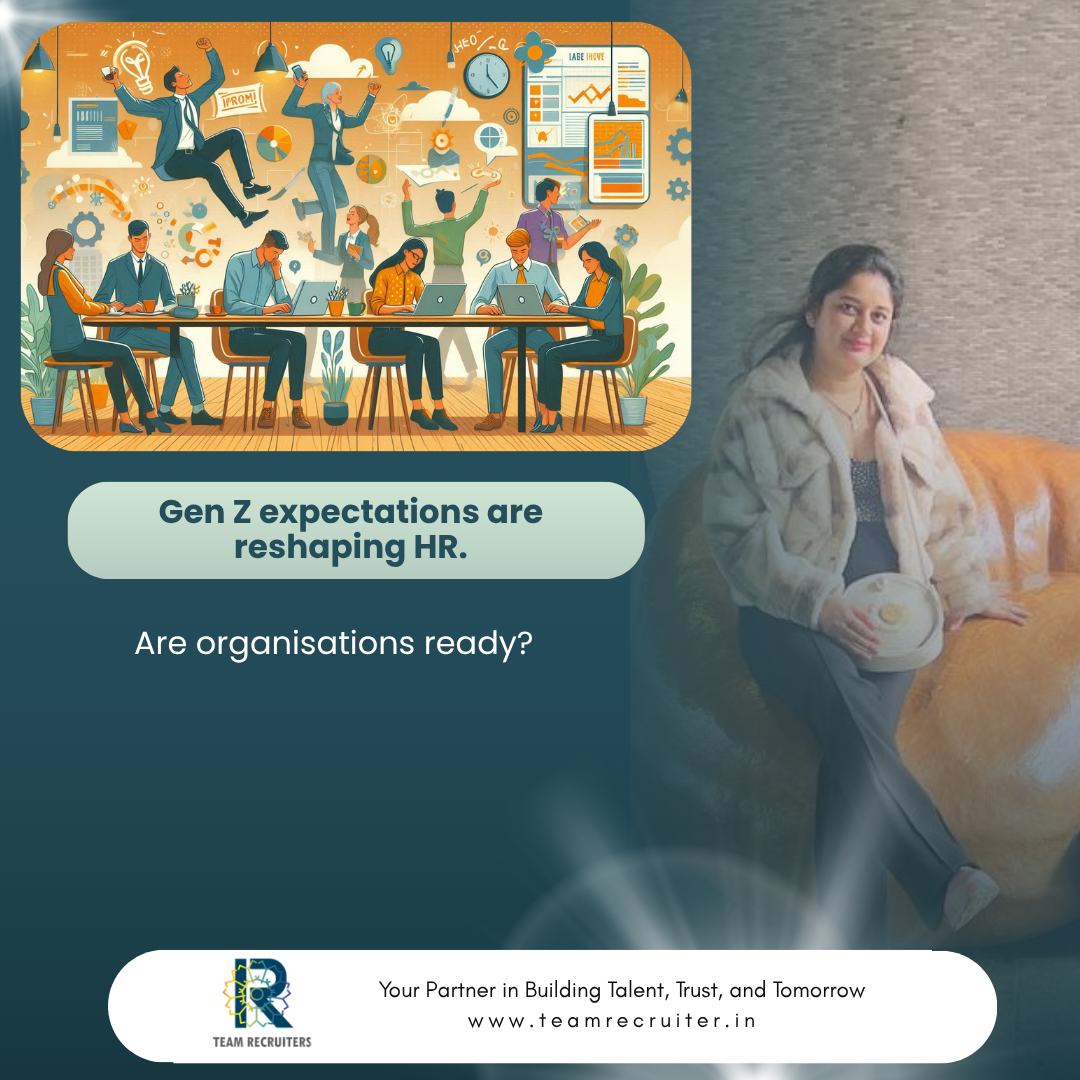
Gen Z expectations are reshaping HR. Are organisations ready?
For years, HR largely asked employees to adapt to the organisation.
Gen Z is increasingly asking organisations to adapt too.
And that is changing the workplace conversation.
For Gen Z, a job is no longer just about salary and designation. They are looking at:
👉 Purpose: “Why does my work matter?”
👉 Flexibility: “Can I be trusted to deliver without being watched?”
👉 Growth: “What will I learn here, and where can I go?”
👉 Feedback: “Why wait for an annual appraisal to tell me how I am doing?”
👉 Well-being: “Is performance really worth compromising my personal life?”
👉 Transparency: “If I am expected to be accountable, why aren’t decisions and expectations clear?”
These expectations are sometimes labelled as impatience, entitlement or lack of commitment.
But perhaps HR needs to look at them differently.
Every generation challenges the workplace in its own way.
Gen Z is challenging organisations to rethink how they communicate, manage performance, build careers, define flexibility and create employee experiences.
I have also seen this play out during recruitment.
Some young professionals are reluctant to travel for multiple interview rounds. Others expect virtual interactions, quicker feedback and greater transparency on compensation and role expectations.
Is that unreasonable?
Not always.
But there is another side to this conversation.
Expectations come with responsibilities.
Flexibility must come with accountability.
Work-life balance cannot mean lack of ownership.
Fast growth requires continuous learning.
And asking for trust means demonstrating reliability.
The real challenge for HR isn’t to simply “give Gen Z what they want.”
It is to create a workplace where employee expectations and organisational expectations meet in the middle.
Because the future of HR may not be about managing generations differently.
It may be about building workplaces flexible enough to work for everyone.
The question is: Are we preparing Gen Z for the workplace—or is Gen Z preparing the workplace for the future?

Comments are closed.