
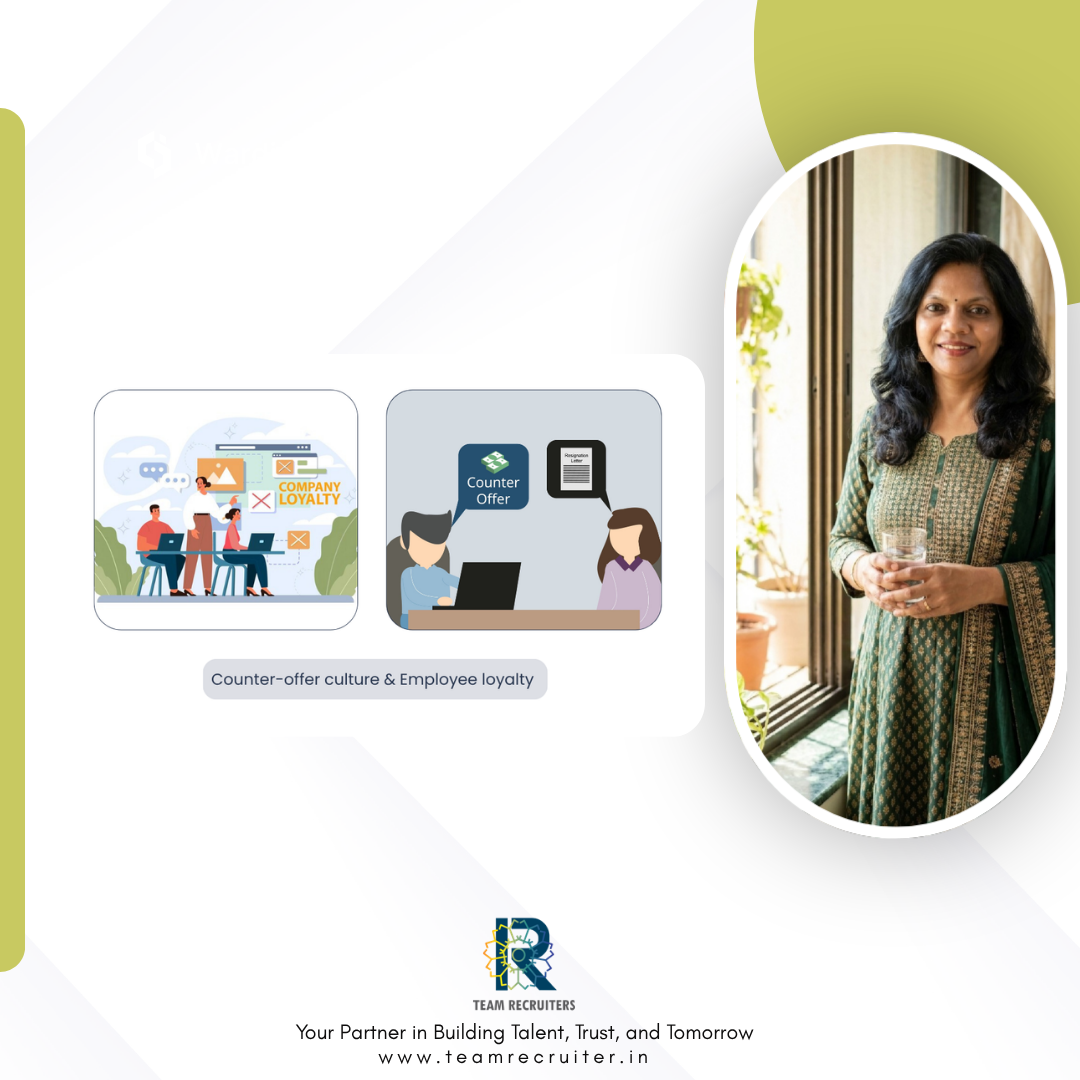
Counter-offer culture & Employee loyalty
Other Articles:
“Loyalty is a two-way street” — yet in today’s corporate world, it often gets tested only when a resignation lands on the table.
The growing “counter-offer culture” is changing the dynamics of employee loyalty in organizations.
An employee works sincerely for 3–5 years, consistently delivers, takes ownership, stretches during crises, and patiently waits for meaningful recognition. Conversations around compensation correction or career growth often get deferred with “next cycle”, “budget constraints”, or “timing issues”.
Then one day, the employee resigns.
Suddenly:
• Compensation budgets appear
• Promotions become possible
• Flexibility is offered
• Leadership attention increases
The uncomfortable question is:
Why does value become visible only after an exit threat?
A few months back, I witnessed a situation where a company was trying to hire niche talent from competitors for a critical business role. Multiple rounds of interviews happened, expectations were aligned, and the candidate was almost ready to move.
But when it came to closing the offer, the company kept delaying and negotiating aggressively over compensation.
Meanwhile, the candidate’s current employer made a strong counter-offer:
• Immediate salary correction
• Expanded role
• Better visibility with leadership
The candidate stayed back.
Ironically, the same organization later complained about “lack of loyalty” in the market.
The reality is:
Counter-offers are not always about money.
Sometimes they are delayed recognition.
At the same time, employees also need to reflect honestly:
If dissatisfaction has already reached the resignation stage, will a higher salary alone solve deeper concerns around culture, growth, leadership trust, or work-life balance?
In my experience, most counter-offers only postpone the inevitable unless the root causes are genuinely addressed.
Organizations that retain talent successfully are usually the ones that:
• Listen before employees disengage
• Reward consistency, not just resignation
• Build transparent growth paths
• Create cultures where people feel valued before they decide to leave
True loyalty cannot be bought at the exit gate.
It is built consistently through trust, fairness, respect, and timely recognition.

Comments are closed.