
The WFH vs WFO Dilemma: A Generational Shift or a Workplace Reality?
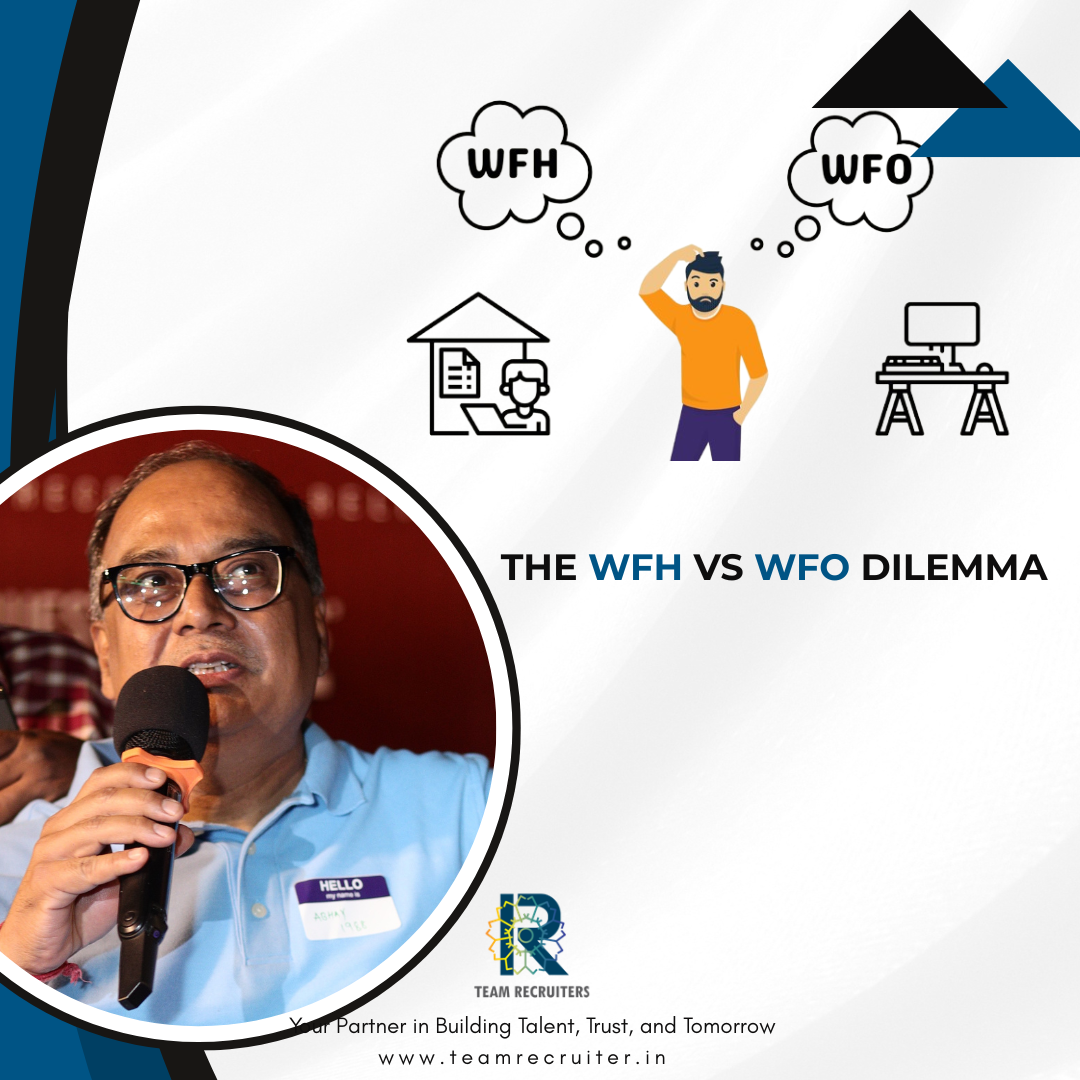
The workplace landscape has undergone a dramatic transformation over the last few years. A generation of young professionals began their higher education and, in many cases, even their first jobs during the COVID era. For many of them, learning, collaborating, interviewing, and working remotely became the norm rather than the exception.
As recruiters, we are witnessing an interesting trend.
Many professionals are hesitant to pursue opportunities that require a complete return to office (WFO). Some are reluctant to even attend face-to-face interviews, preferring virtual interactions all the way through the hiring process. At the same time, we have also seen candidates working in fully remote environments develop second thoughts while finalizing WFO roles. Interestingly, the reverse is equally true—professionals accustomed to office environments sometimes hesitate before accepting remote opportunities due to concerns around visibility, collaboration, learning, and career progression.
The reality is that there is no one-size-fits-all solution.
Organizations design their work models based on business needs, customer expectations, operational requirements, culture, collaboration demands, and cost-benefit considerations. Some organizations thrive with a fully remote workforce, others succeed with hybrid models, while many continue to believe that in-person collaboration drives innovation and productivity.
The challenge arises when candidate expectations and organizational realities do not align.
For employers, flexibility has become a powerful talent attraction tool, but it cannot come at the cost of business effectiveness. For professionals, career decisions should ideally be based not only on convenience but also on long-term learning, growth opportunities, mentorship, networking, and exposure.
The way forward lies in transparency from both sides.
Organizations must clearly communicate their working model upfront and explain the rationale behind it. Candidates, on the other hand, should evaluate opportunities holistically rather than focusing solely on the location of work.
Ultimately, successful careers are built not on where we work from, but on what we learn, how we contribute, and the value we create.
The future of work may continue to evolve, but adaptability will remain the most valuable skill for both employers and employees.
What are your thoughts? Is the future predominantly WFH, Hybrid, or WFO?

Comments are closed.